




Moonstone Colours and the Blue Sheen
Moonstone itself is usually colourless, white or slightly greyish. What makes it special is not its body colour, but the sheen on its surface.

Adularescence as a mark of quality
Adularescence is caused by microscopically thin layers inside the stone. Light is scattered by these layers, creating a floating light effect. The finer the layers, the more intense and bluer the sheen appears.
In inferior stones, the sheen is whitish and diffuse. High-quality specimens show an intense, electric blue that seems to wander across the stone as it moves. This royal-blue sheen is the most important mark of quality.

Blue moonstone
The term blue moonstone refers to stones with a particularly intense blue sheen. The body colour remains transparent or slightly milky. The more transparent the stone and the more intense the blue, the more valuable it is.
Genuine blue moonstones with strong adularescence are rare and come almost exclusively from Sri Lanka. They fetch prices many times higher than those of ordinary moonstones.

Rainbow moonstone
So-called rainbow moonstone shows multicoloured light reflections instead of a uniform blue sheen. However, what is often sold in the trade as rainbow moonstone is frequently labradorite from India. Genuine rainbow moonstone exists, but is rare.
Rainbow moonstone is not suitable for investment. Prices are low and the market is dominated by treated material.
What Makes a Moonstone Valuable?
The value of a moonstone is determined by four factors.
Intensity of the sheen
The most important criterion is the strength and colour of the adularescence. An intense, vivid blue is the most valuable. The sheen should be clearly visible when the stone moves and should wander across the entire surface. A whitish or dull sheen reduces the value considerably.
Transparency
High-quality moonstones are almost transparent with a hint of milkiness. Heavily clouded or opaque stones are worth considerably less. It is transparency that really brings out the blue sheen.
Clarity
Moonstones should be free of visible inclusions. Cracks, cloudiness or dark spots reduce the value. However, fine inclusions can enhance the adularescence, which is why perfect clarity is not always the goal.
Size and price
Moonstones with a strong blue sheen are rare in larger sizes. Stones over 5 carats with a royal-blue sheen and good transparency are scarce and command corresponding prices.
The price range is wide. Ordinary moonstones cost just a few euros per carat. High-quality blue moonstones from Sri Lanka cost between €30 and €100 per carat. Exceptional specimens with a perfect blue sheen can reach €200 to €300 per carat.
Mining regions – where do the best moonstones come from?
Origin is decisive for quality. Genuine royal-blue moonstone with intense adularescence comes almost exclusively from Sri Lanka.
Moonstone mining regions worldwide
The characteristic blue sheen, adularescence, only reaches its full intensity in stones from Sri Lanka. Indian moonstones are mass-produced and not suitable for investment.

Sri Lanka
The Meetiyagoda region has been supplying the world’s most sought-after moonstones for centuries. Only here do specimens form with the characteristic intense royal-blue sheen.

India
India produces large quantities, mostly sold as rainbow moonstone . These are often labradorite. Not suitable for investment.

Myanmar
Myanmar occasionally supplies high-quality moonstones with a good blue sheen. Quantities are limited and rarely reach the international market.

Madagascar
An emerging mining region with variable qualities. Individual finds reach good quality, but consistency is not yet there.

Recognising Moonstone
The moonstone market is hard to navigate. Anyone looking for a high-quality stone needs to know what to look out for.
Recognising genuine moonstone
Genuine moonstone belongs to the feldspar group and shows the characteristic adularescence. The sheen should appear soft and floating rather than sharply defined. When the stone is turned, the light effect wanders across the surface.
Synthetic moonstones exist, but are rare on the market. More often, other stones are sold as moonstone, especially labradorite and opalite.
Confusion with other stones
Labradorite is often sold as rainbow moonstone, but it is a different mineral with a different light effect. Opalite is artificial glass with a milky sheen and not a genuine gemstone. Both are considerably cheaper than genuine moonstone.
For high-quality stones, we recommend a certificate from a gemmological institute. For moonstones under €100, however, the effort is rarely worthwhile.
Moonstone as an Investment
Moonstone is a fascinating gemstone with a loyal following. However, we do not recommend it as a primary investment.
Arguments in favour of moonstone include its unique appearance, which no other gemstone can offer, and the limited availability of top qualities from Sri Lanka. High-quality blue moonstones are becoming increasingly rare.
Several factors speak against moonstone as an investment. The market is small and shaped by esotericism. There is no established secondary market for resale. Prices are low compared with classic investment gemstones, and demand fluctuates with fashion trends.
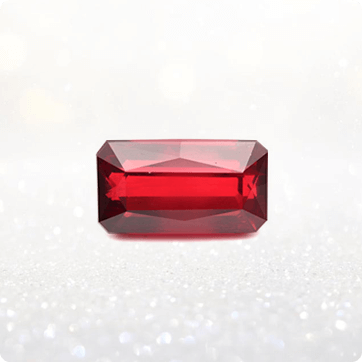
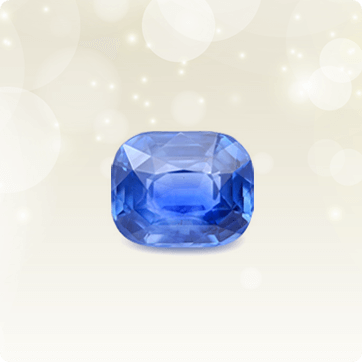
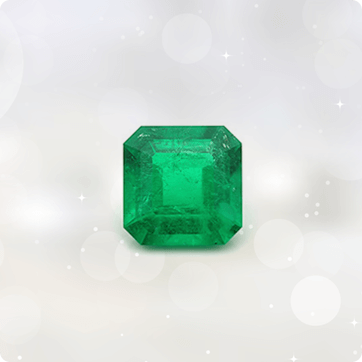
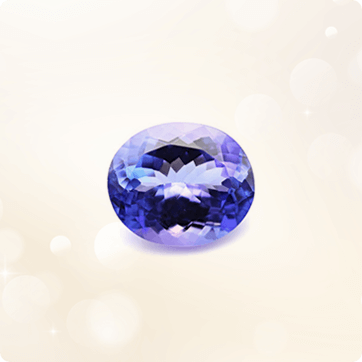
Our recommendation is therefore to invest first in the established investment gemstones ruby, sapphire, emerald and tanzanite. Moonstone can be a lovely addition for connoisseurs, but it does not meet the criteria of a classic investment gemstone.
We would be happy to advise you on your personal investment strategy – free of charge and without obligation.