




Peridot

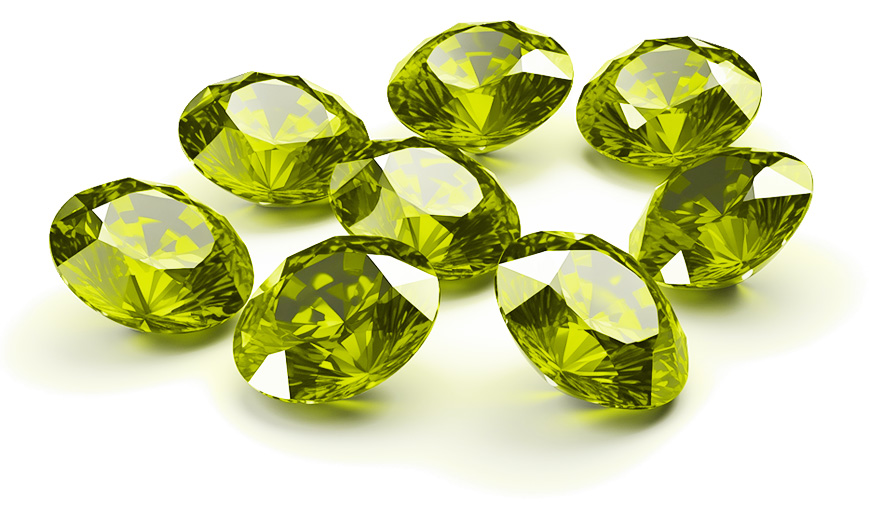
Peridot is one of the few gemstones that occur in only a single colour: green. Also known as olivine, this stone displays a characteristic yellowish green to olive green that sets it apart from other green gemstones. Peridot fascinates with its lively glow and its long history.

On this page, you will find out which quality criteria a peridot must meet to qualify as an investment, which mining regions produce the most valuable stones and what to look out for when it comes to the price per carat.

peridot
  • logo-allgemeine-zeitung
  • dawo-logo
  • finanzwelt-logo
  • wallstreet-logo

What makes a peridot valuable?

square-diamond

Colour

With peridot, colour intensity is the decisive price driver. Pale or brownish stones are considerably cheaper, while specimens with a rich, pure green achieve top prices. The most sought-after colour is an intense grass green without any brown or yellow tinge.

Of interest to connoisseurs: the green colour is caused by iron in the crystal lattice. Depending on the iron content, the hue ranges from light yellowish green through classic olive green to rare deep green tones from Pakistan and Myanmar.

pear-blue

Clarity

Strict standards apply to peridot: an investment stone must be eye-clean. This means it must not have any inclusions that you can see without magnification. Typical of peridot are so-called lily pad inclusions, which should not be visible in high-quality stones.

Fortunately, peridots often occur with good clarity. Heavily clouded or milky stones are not suitable as an investment and are correspondingly inexpensive on the market.

diamond-blue

Carat and price

The price per carat of peridot rises with weight, especially for top colours. In our experience, investment quality starts with stones of 10 carats or more with intense colour and perfect clarity. Larger peridots over 10 carats are rare and fetch collectors’ prices.

Peridots in investment quality currently cost around €500 to €750 per carat. Top specimens from Pakistan with a perfect grass-green colour can command considerably higher prices.

The Cut

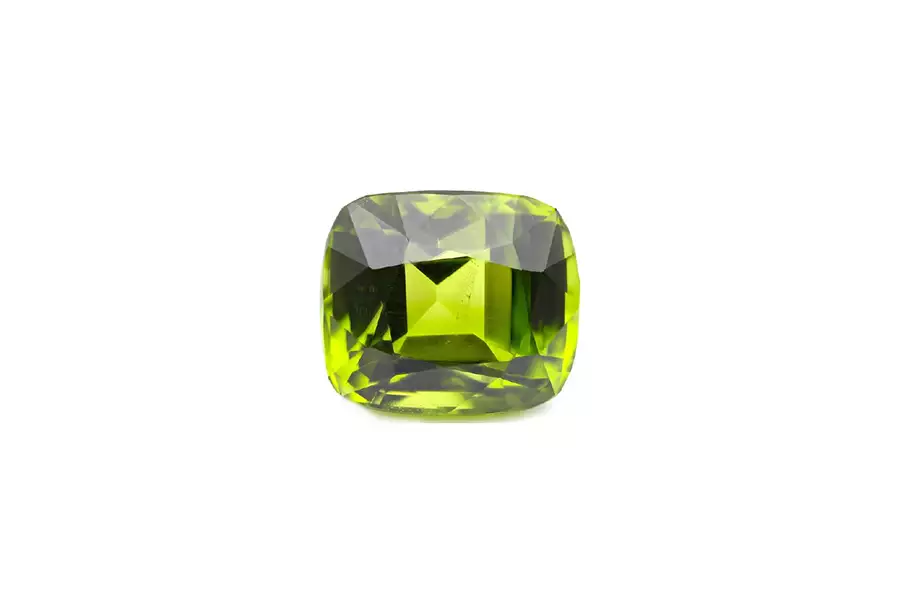
High-quality peridots are almost exclusively facet cut. The facets refract the light and create the stone’s characteristic liveliness. Cuts that show off the intense green colour to best effect are particularly popular.

Common cuts are oval, round, cushion and emerald cut. With a Mohs hardness of 6.5 to 7, peridot is somewhat softer than many other gemstones, which calls for particular care when cutting.

peridot-p

Recognising Peridot

The gemstone market knows various forms of treatment and imitation. Anyone wishing to buy a peridot as an investment needs to know what to look out for.

Common treatments

A major advantage of peridot: as a rule, it is not treated. Unlike many other gemstones, peridots naturally occur in their characteristic green colour. Heating or other colour treatments are uncommon for this stone and would not be effective anyway.

This makes peridot particularly attractive to investors who value completely natural stones. A certificate confirms the stone’s natural origin.

Confusion with Other Stones

Peridot vs emerald and other green stones

At first glance, peridot can be mistaken for emerald. Both are green, but emerald tends towards a cooler bluish green, while peridot shows a warmer yellowish green to olive green. Emerald is also slightly harder, at 7.5 to 8.

Green tourmaline or tsavorite can look similar, too. Peridot is distinguished by its characteristic oily lustre and its typical double refraction. A certificate from a recognised institute provides clarity.

Peridot as an Investment

Peridot is a beautiful gemstone with interesting potential for appreciation. As an addition to an existing gemstone portfolio, it can be an attractive option if certain quality criteria are met.

Arguments in favour of peridot include its natural clarity without the need for treatment, its historical significance as one of the oldest known gemstones and the limited availability of top qualities from Pakistan.

Arguments against peridot as a main investment are its comparatively low hardness of 6.5 to 7, its lower recognition and demand compared with the Big Four, and the large supply of cheaper stones from Arizona.

Our recommendation is therefore to invest first in the established investment gemstones ruby, sapphire, emerald and tanzanite. Peridot is suitable as an addition for investors who want to diversify the green part of their portfolio.

gems

Price development of peridot

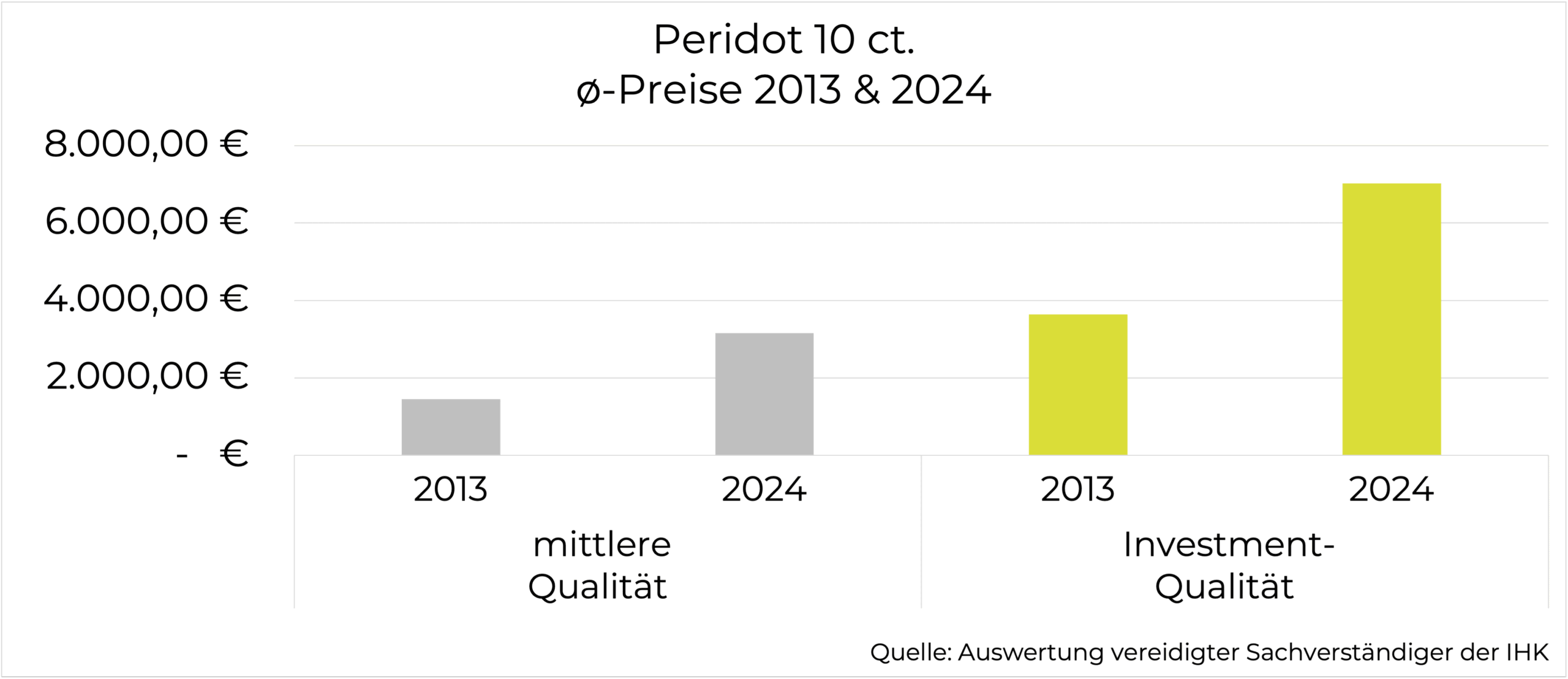
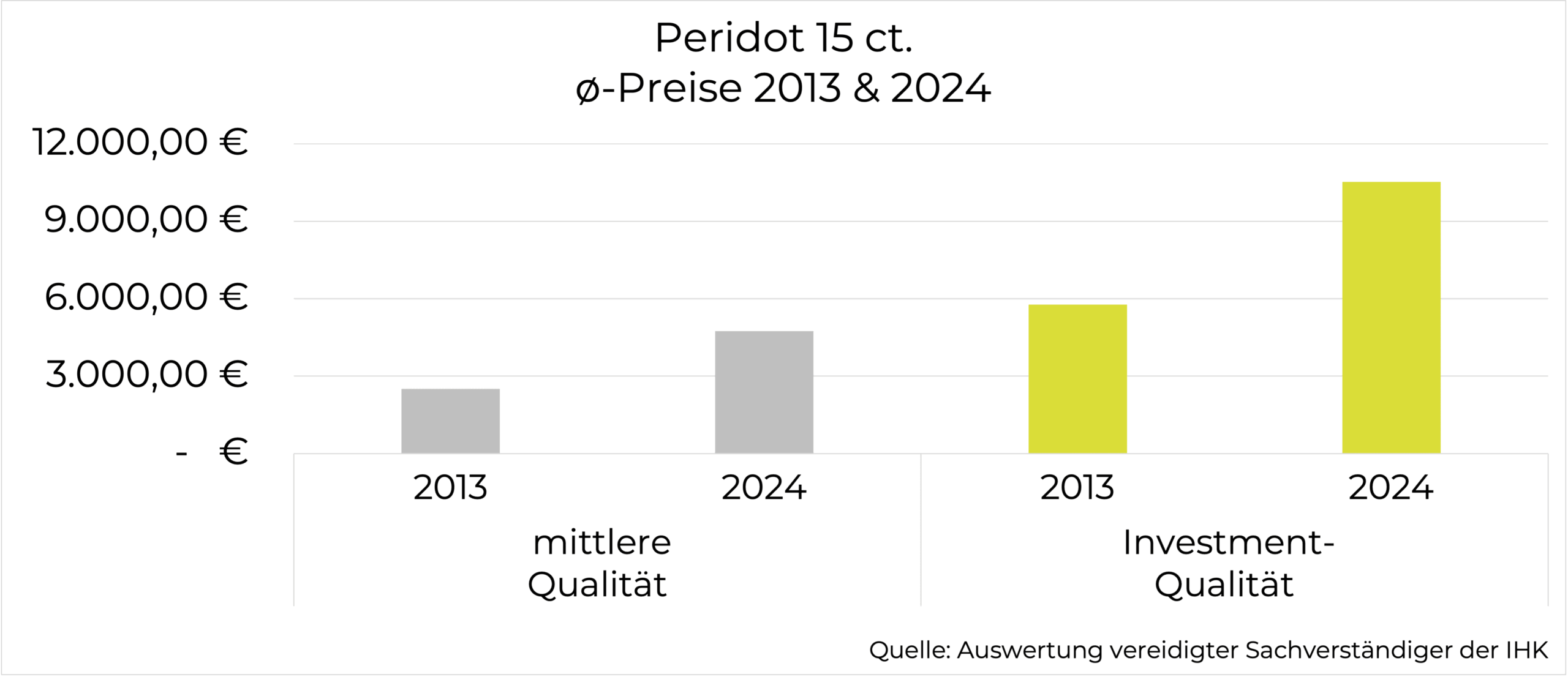
How peridot prices have developed is shown by an analysis carried out by a sworn expert appointed by the IHK (German Chamber of Industry and Commerce): he determined the average prices in 2013 and 2024 for peridots of 10, 15 and 20 ct – in each case in medium quality and in investment quality. We do not consider smaller stones: even in high quality they occur too frequently to be suitable as an investment. For comparison, we also list our current prices (as of 2026).
Price development of peridot, 10 carats

In 2024, a 10.0 ct peridot in investment quality cost around €7,000 on average

In 2013, ten-carat stones in investment quality averaged around €3,650. By 2024, their value had risen to around €7,000 – almost double. Peridots in medium quality also gained, rising from around €1,450 to around €3,150. Nevertheless, we recommend that you focus on investment quality: only these stones are rare enough in nature to retain their value over the long term.

For comparison, our current range (as of 2026): peridots of around 10.5 ct cost around €730 per carat with us – that is, around €7,400 to €7,800 per stone.

Price development of peridot, 15 carats

In 2024, a 15.0 ct peridot in investment quality cost around €10,500 on average

For fifteen-carat stones, the average price in investment quality rose from around €5,700 (2013) to around €10,500 (2024) – an increase of just over 80%. In medium quality, prices rose from around €2,450 to around €4,700. A stone in investment quality therefore costs more than twice as much.

Please note:

A peridot complements your portfolio; it is not its foundation. That is formed by ruby, sapphire and emerald in investment quality.

Price development of peridot, 20 carats

In 2024, a 20.0 ct peridot in investment quality cost around €13,000 on average

Large peridots in top quality are rare: in 2013 the average was around €7,250, and in 2024 around €13,000 – an increase of almost 80%. Over the same period, stones in medium quality only rose from around €3,000 to around €4,850.

The larger the stone, the more strongly quality determines how its value develops.

Types of Gemstones