




A Mineralogical Look at Opal
Opal belongs to the oxide mineral class and is chemically a hydrous silicon dioxide (SiO₂·nH₂O). One of its most striking properties is that, unlike most other gemstones, it has no crystal structure but is an amorphous solid – its structure is more similar to that of glass. In nature, opal usually occurs as nodular masses or as a filling in veins and fissures in rock. In principle, there are three main types: precious opal, which shows the famous iridescent play of colour; common opal, which is single-coloured or colourless and shows no play of colour; and fire opal, often intensely orange to red, which may or may not show a play of colour. With a Mohs hardness of 5.5 to 6.5, opal is comparatively soft and therefore more susceptible to scratches and knocks than many other gemstones.
The formation of opal is a fascinating process: it forms from a silica-bearing water solution that slowly seeps into rock fissures or even into organic material (such as wood or bone, which can result in opalised petrified wood). As this water gradually evaporates, a solid silica gel remains, which hardens over long geological periods.
This process typically takes place in sedimentary rocks (above all in Australia) or in volcanic rocks (e.g. in Mexico or Ethiopia) under specific temperature, pressure and climatic conditions.
The base colour of an opal (body tone) – i.e. the stone’s own colour, independent of its play of colour – is determined by trace elements in the surrounding rock, such as iron, copper, nickel or silver. It can range from white, grey and blue through green to orange, red or even black. The famous play of colour of precious opals, on the other hand, is created by the refraction and interference of light on microscopically small, regularly arranged spheres of silica gel. The size and arrangement of these spheres determine which colours become visible.
The most important deposits of precious opal, around 95% of global production, are in Australia, particularly in regions such as Coober Pedy, Lightning Ridge and Andamooka. Other important suppliers are Mexico (especially for fire opals), Ethiopia (Welo opals, black opals) and Brazil.
How and Where Is Opal Used?
By far the most common and best-known use of opal is as a jewellery stone. Its unique play of colour and the variety of its forms make it a favourite for individual and expressive pieces of jewellery. Opals are made into rings, pendants, earrings, brooches, bracelets and necklaces. Dark opals such as black opal or boulder opal are often set as cabochons (smoothly polished and domed), as this cut gently accentuates the play of colour and lets the colours dance across the surface. Clear opals or fire opals can also be faceted. They are often set in gold (white or yellow gold) or silver, with the metal complementing the colours of the opal.
Historically, opal has been highly prized in Europe and other cultures for over 2,000 years. The Romans revered it as a symbol of hope, love and purity, while for the ancient Greeks it stood for foresight and prophecy. Famous figures such as Queen Victoria and Mark Antony are said to have had a fondness for opals.
Since 1993, opal has also been the official national gemstone of Australia, which underlines its cultural significance.
In addition, opal is used in esoteric traditions and crystal healing. Various positive effects are attributed to it, for example on metabolism, the cardiovascular system, and the stomach and intestines. It is also said to contribute to emotional stability and to promote joie de vivre and optimism. These attributed effects are not scientifically proven.
Opal also has a long tradition as a gift and is considered the anniversary stone for the 14th wedding anniversary. It is often given as a symbol of fidelity, hope and protection. For those born in October, opal – often together with tourmaline – is the official birthstone. In Chinese astrology, it is associated with the zodiac sign of the snake, where it symbolises wisdom, change and spiritual strength.
Is Opal Suitable as an Investment?
The question of whether opals are suitable as an investment needs to be considered in a nuanced way. On the one hand, certain opal varieties, especially the rare black opal from Lightning Ridge, Australia, can achieve extremely high prices and are among the most expensive gemstones in the world. A price of around €3,000 per carat for high-quality black opals is not unusual, and top specimens can be far higher. Owing to their rarity and high demand from collectors and connoisseurs, such stones often show good value development.
The value of an opal is determined by several key factors:
Play of colour: the intensity, brilliance, brightness and variety of the colours displayed. Red flashes of colour are considered the rarest and most valuable, followed by orange, yellow, violet, green and blue.
Pattern of the play of colour: large, contiguous areas of colour or sought-after patterns (e.g. “harlequin”) are more valuable than many small, restless dots (“pinfire”).
Body tone: in dark opals (black opal, semi-black opal), a body colour that is as dark and opaque as possible is desirable, as it increases the contrast with the play of colour. In light opals (white opal, crystal opal), transparency or translucency is often valued.
Clarity and transparency: inclusions or cloudiness (strong opalescence) that impair the play of colour reduce the value.
Cut and shape: a good cut maximises brilliance and play of colour. Symmetrical shapes, often ovals with a good dome, are preferred.
Size and origin: larger stones with excellent properties are rarer. Certain origins (e.g. Lightning Ridge for black opals) stand for top quality.
Despite the existence of very valuable opals, it is generally not advisable to regard opals as a primary investment unless you have in-depth expertise. The market is more complex and less standardised than for diamonds or the “Big Three” of coloured gemstones (ruby, sapphire, emerald). The latter have a broader, established investor base and often higher liquidity. Reselling high-quality opals can take longer and requires specialist channels. In addition, many opals available on the market are not of investment quality.
If you are looking for investment gemstones that resemble opal in certain colour characteristics but have a more established position in the investment market, the following could be of interest:
Tourmaline: especially Paraíba tourmalines with their intense blue and green tones.
Morganite: in delicate pink and peach tones.
Spinel: in vivid pink, red and blue tones.
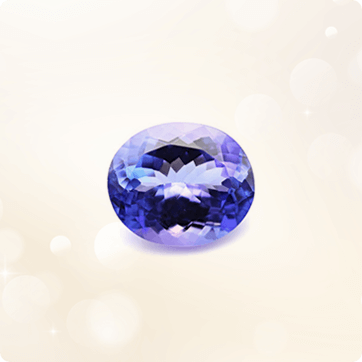
Tanzanite: with a shimmering blue-violet.
Rubellite: intense red and pink tones that can be reminiscent of fire opals.
Opals are therefore primarily fascinating jewellery and collector’s stones with a unique aesthetic. Any investment should only be made in absolute top qualities and after careful examination and advice.