Aquamarine
Aquamarine belongs to the beryl family and is a direct relative of emerald. Its sea-blue colour and a Mohs hardness of 7.5 to 8 make it interesting for investors who wish to expand their portfolio with an attractive coloured gemstone.
On this page, you will find out which quality criteria an aquamarine must meet to qualify as an investment, which mining regions produce the most valuable stones and what to look out for when it comes to the price per carat.





How Valuable Is an Aquamarine?
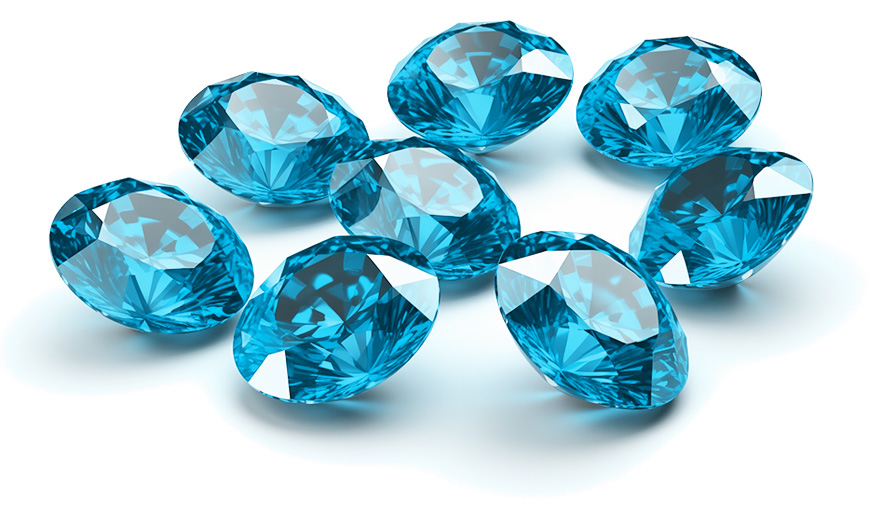
The value of an aquamarine is determined by four key factors. Colour, clarity, cut and carat weight must all be right for a serious investment. A compromise on even one factor can considerably reduce the resale value.

Colour as the main value criterion
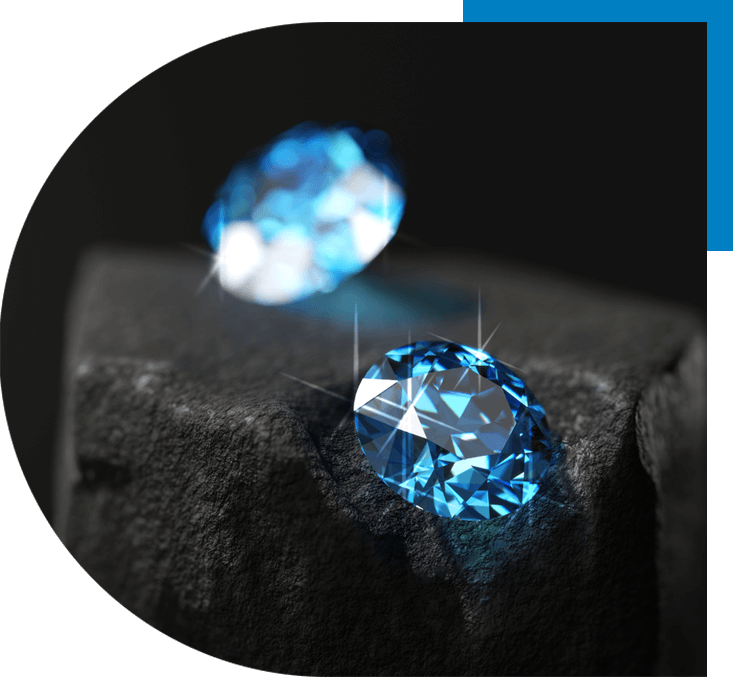
With aquamarine, colour intensity is the decisive price driver. While pale, almost colourless stones are available in large quantities, specimens with a rich, deep sea blue achieve top prices. The most sought-after colour designation is Santa Maria. The term comes from the mine of the same name in Brazil, which produced particularly intensely coloured stones.
Aquamarines show pronounced pleochroism. Depending on the viewing angle, the same stone can appear almost colourless or deep blue. An experienced cutter uses this effect to show off the colour to best effect.

The clarity of aquamarine
Unlike emeralds, where slight inclusions are accepted, a clear rule applies to aquamarine: an investment stone must be eye-clean. Fortunately, aquamarines occur in nature without visible inclusions more often than many other gemstones.
Typical inclusions are fine, parallel channels in the crystal lattice. In inferior stones, these become visible as white streaks or small clouds. Such specimens are not suitable as an investment.

Carat weight and price of aquamarine
The price per carat of aquamarine does not rise linearly with weight. Small stones under 5 carats are comparatively inexpensive, as they occur more frequently. In our experience, investment quality starts with stones of 5 carats or more with excellent colour and clarity.
Aquamarines in investment quality currently cost around €650 to €1,050 per carat, with top stones of a particularly intense blue considerably more. This is much cheaper than the Big Four, which means both opportunity and risk. There is potential for appreciation, but demand is less stable.
The Cut – Precision for Maximum Brilliance
Clear aquamarines are almost exclusively facet cut. The facets refract the light and create the stone’s characteristic fire. Popular cuts are oval, pear and the classic step cut.
Only stones with inclusions or the rare cat’s-eye effect are given a cabochon cut with a smoothly polished, domed surface.
Mining regions – where do the best aquamarines come from?
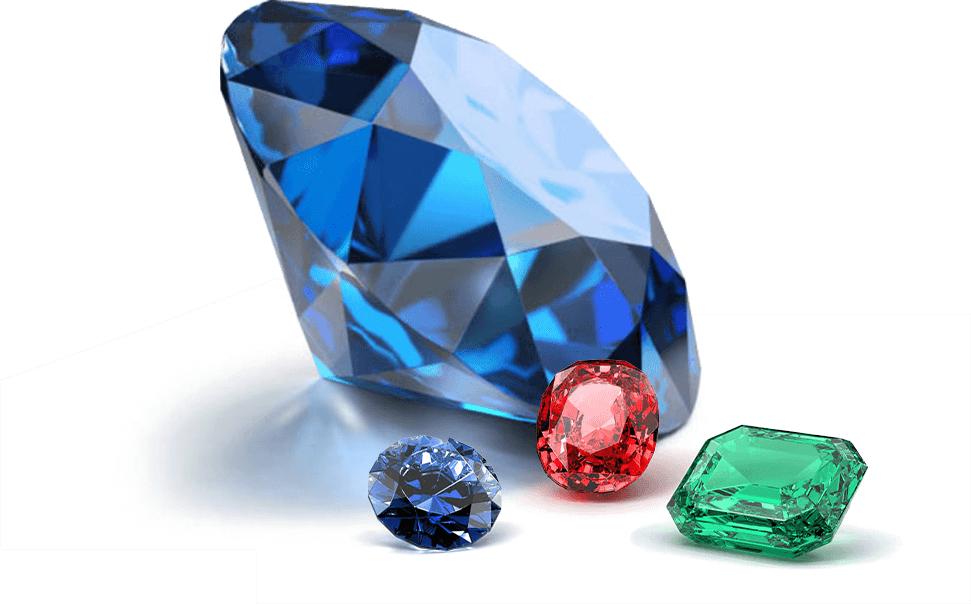
The origin of an aquamarine has a considerable influence on its value. Stones from the legendary Santa Maria mine in Brazil fetch the highest prices on the international market.
Aquamarine mining regions worldwide
Brazil is the main mining region for aquamarines. However, several other mining regions are also worth mentioning!


Brazil
The state of Minas Gerais is regarded as the most important mining region in the world. Aquamarines from the Santa Maria mine show the most intense blue and fetch top prices of over €500 per carat.

Mozambique
Since 2012, Mozambique has been supplying high-quality aquamarines with intense saturation. Stones from the Alto Ligonha region often reach depths of colour that rival Brazilian specimens.

Madagascar
The deposits in the north of the island produce aquamarines of exceptional clarity. Due to limited production volumes, Madagascan stones are regarded as an interesting investment with potential for appreciation.

Pakistan
The Shigar Valley in the Karakoram occasionally yields spectacular crystals at altitudes of over 4,000 metres. These rare finds are particularly sought after by collectors.

Recognising Aquamarine
The gemstone market knows various forms of imitation and treatment. Anyone wishing to buy an aquamarine as an investment needs to know what to look out for.
Common treatments
By far the most common treatment for aquamarines is heating. This removes greenish or yellowish tones to achieve a purer blue. The treatment is accepted in the trade and must be disclosed. However, it reduces the value compared with untreated stones. Unlike emeralds, aquamarines are not oiled or filled with synthetic resin. If you are offered an oil-treated aquamarine, you should be suspicious.
Synthetic stones and imitations
Synthetic, laboratory-grown aquamarines exist, but are rare on the market. More often, blue topazes, spinels or coloured glass are sold as aquamarine imitations. For investors, there is a clear recommendation: only buy stones with a certificate from a recognised gemmological institute such as DSEF, GRS or SSEF. The certificate confirms authenticity, any treatments and origin.
Aquamarine as an Investment
Aquamarine is a beautiful gemstone with solid value retention. Nevertheless, we do not recommend it as a primary investment. Arguments in favour of aquamarine include its attractive entry prices compared with ruby, sapphire or emerald. There is also good availability in high qualities, as well as potential for appreciation in stones from emerging regions such as Mozambique. Arguments against aquamarine as a main investment are its lower and less stable demand compared with the Big Four.
There is no established secondary market for resale. In addition, prices are subject to fluctuations due to varying production volumes. Our recommendation is therefore to invest first in the established investment gemstones ruby, sapphire, emerald and tanzanite.